


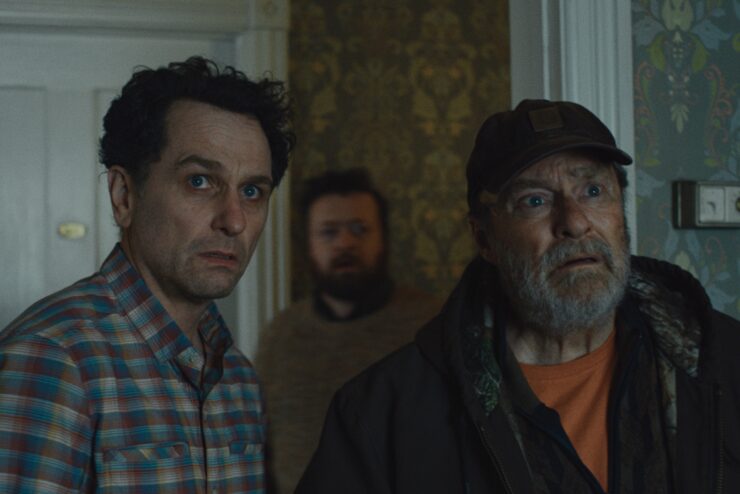
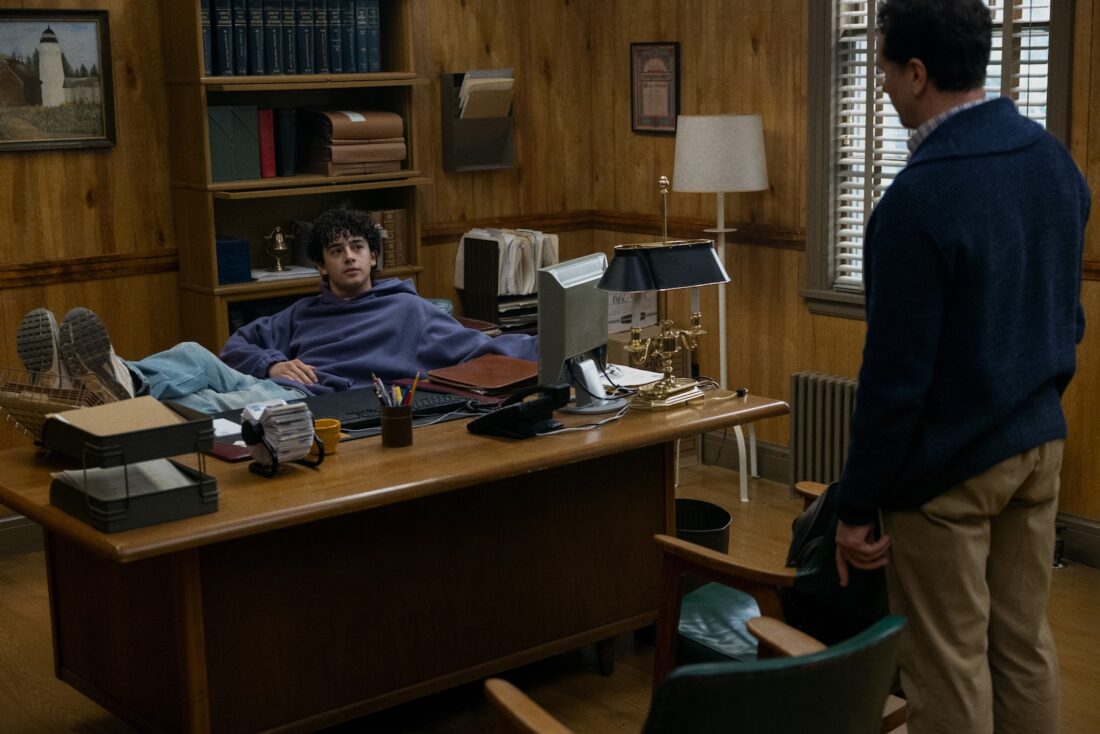
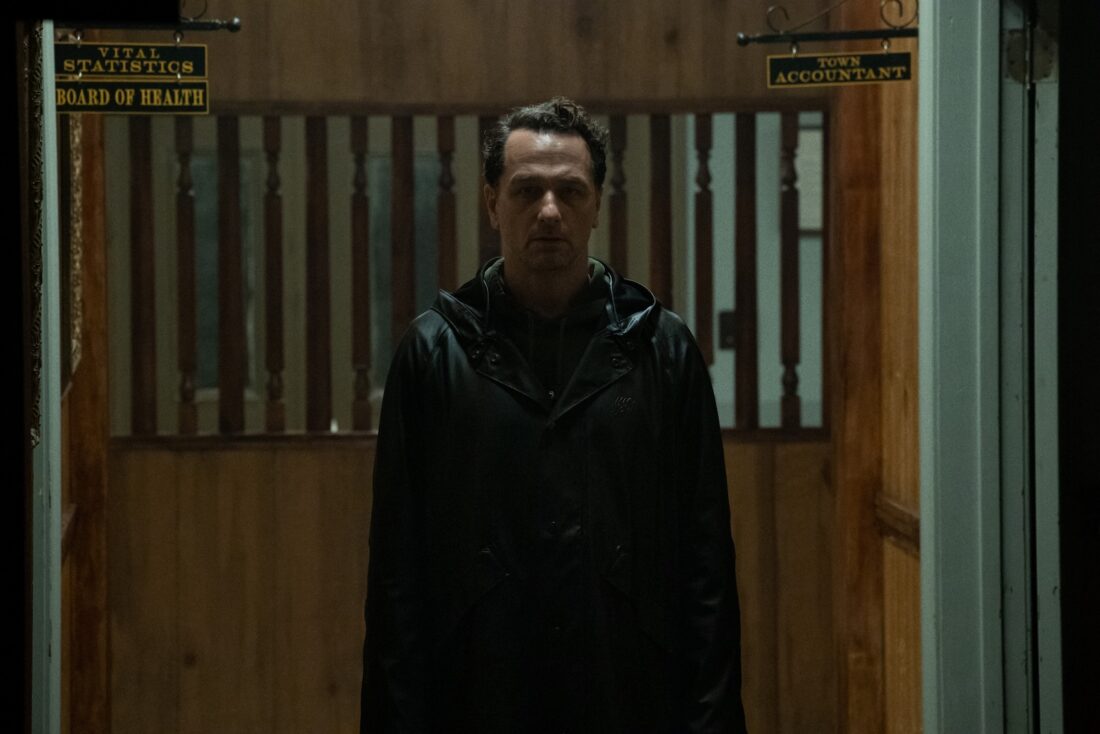
When I watched the first episode of Widow’s Bay, I wasn’t sure what time period the show was in. There are landline phones, old cars, and a Rolodex, of all things, on Tom Loftis’ desk! That worn, thrifted look was intentional. “I’ve been in a lot of places caught in time, where you go into houses and old businesses and they just haven’t changed,” the show’s production designer Steve Arnold told me in a joint interview with the show’s set decorator, Jennifer Engel.
I talked to Arnold and Engel about various sets on Widow’s Bay, including Tom’s office, that basement room with the Clockwork Orange-style chair, the items in the museum, and the lighthouse, which they had to build in a parking lot. Read on for our full discussion.
This interview has been lightly edited for clarity and brevity.
How did you approach creating that nebulous feel in terms of the time period for the island, specifically the office building?
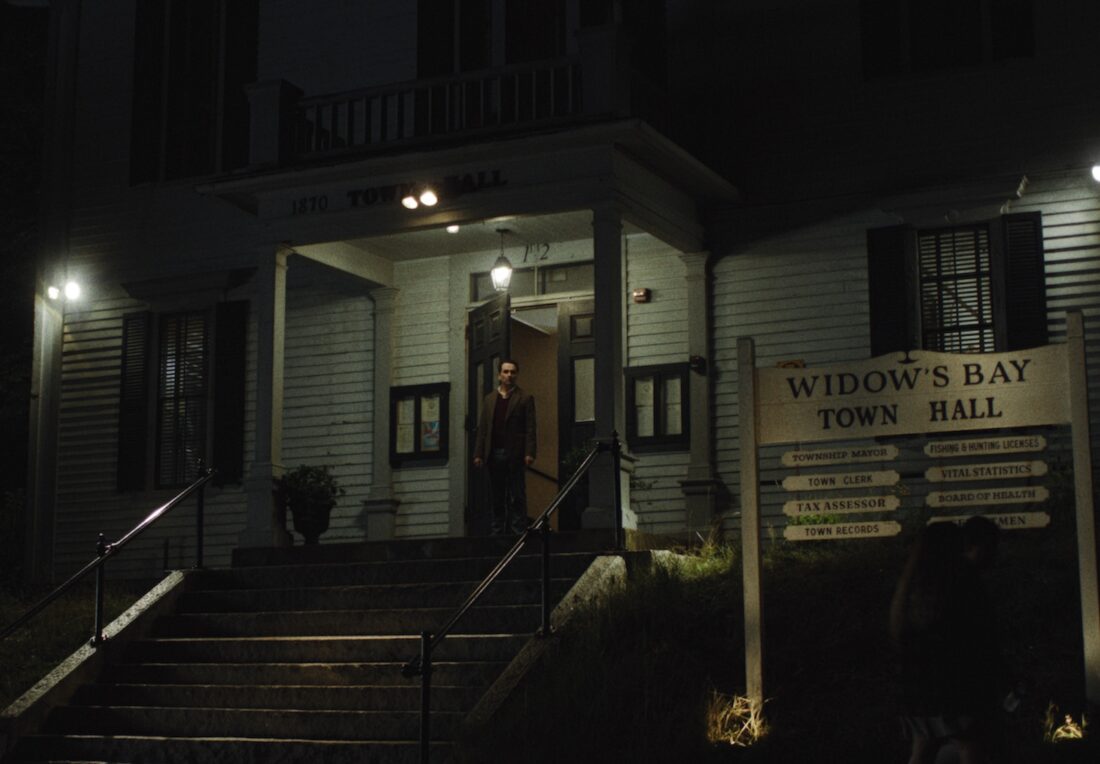
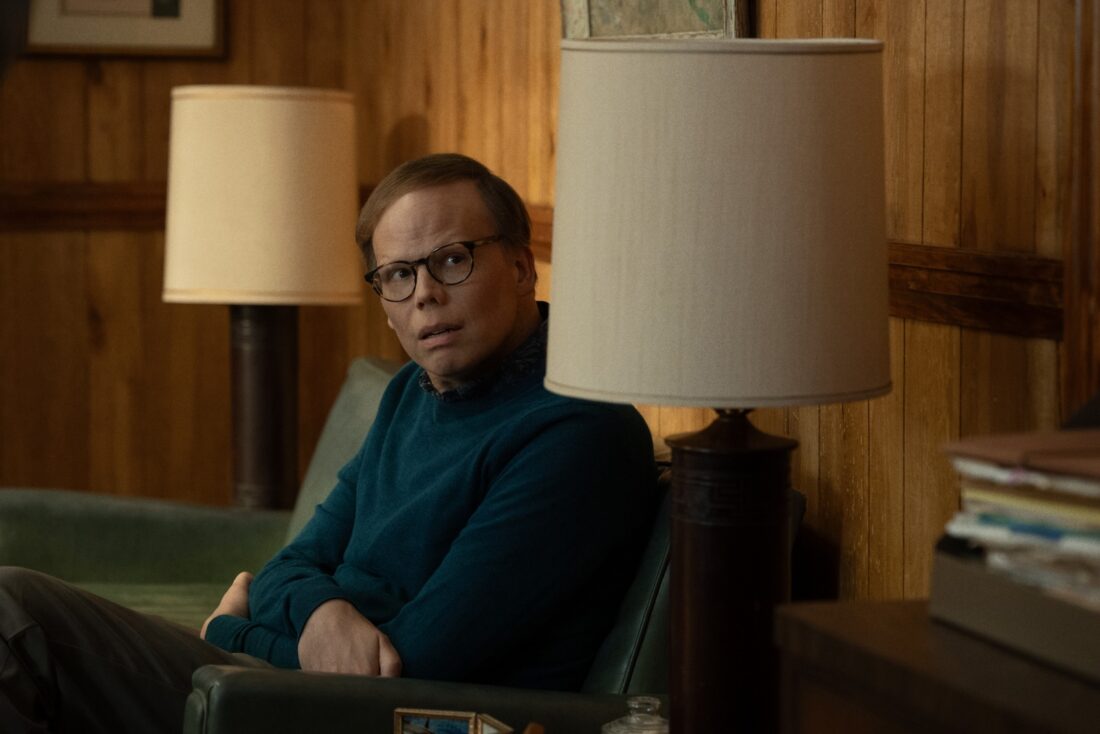
Steve Arnold: I have some instinct about island remote living because I’m on an island and my family is born and raised on an island and all of that, so I know the remote island thing. But I looked at the exterior of the building we used, which was built in the 1800s, and thought—maybe it had been refurbished in the ‘50s and was caught in time. Nothing had changed since then. So there’s wood paneling, and there’s some little clear story windows above the hallway, things like that that were trendy back in the ‘50s. And also Jennifer was able to find all of these old computer monitors and telephones, the Rolodex on the desk, that old typewriter—a lot of young people don’t even know what those things are. They’re museum pieces now, and [showrunner Katie Dippold] had set this very specifically in the ‘70s or ‘80s, so we were following the lead of that. I’ve been in a lot of places caught in time, where you go into houses and old businesses and they just haven’t changed. We used that as a jumping off point.
Jennifer Engel: Yeah, I feel like Katie drove that initially. We were using references from Jaws and The Shining, and those felt like from the ‘70s and ‘80s. But it was more vintage, because the show takes place now, so we were able to lean into the thrifty New England, keep-it-going aesthetic, where if it works, don’t replace it. And then like in Ruth’s kitchen, her sink and fridge and stove are from probably the ‘40s, but her landline phone is from the ‘90s. I tried to think about how, when do you replace stuff, what does that look like visually? So it was inconsistent—it wasn’t of a specific period, but everything was worn and old and used and maintained.
And where did you find those items, like the landlines and the computers and things like that?
Jennifer Engel: There’s a wonderful prop house in Worcester, which wasn’t far from where our stages were, called Westermans, and they are an amazing and generous resource that we really took a lot of advantage of. We also got a lot of stuff from estate sales and yard sales and thrift shops and eBay and Etsy and antique stores, and really just tried to keep everything not new in order to have a pre-existing patina where everything is worn and lived in and loved and used.
Steve Arnold: It pushes the remoteness of this place. You can’t get anything delivered by Amazon—it removes that accessibility, and that helps influence how these things are kept, because maybe they are old, but you can’t get another one right away, and so you just keep it.
And it’s interesting, because in the first episode we’re introduced to the town, but there’s the teaser at the end where you go down to the basement with the chair, which is a very different vibe. How did you approach creating the look of that space, in contrast with the rest of the island?
Steve Arnold: Again, Katie was pretty specific. It was described as a stone room, and there was the thought that there was something hidden, some underground world in some way. We shot that at the very end, even though they put it in the first episode. When we did the basement of the town hall, we worked with the idea that there are these giant stone foundations underneath houses and buildings of all sorts, because that’s what was available before people were pouring concrete and things like that. We then had a layer of brick on top of that, like it had been refurbished or redone, or maybe it burned down somewhere along the line, and then they rebuilt it, and we carried that down into this whole tunnel system. There’s a bunch of tunnels that have a vaulted ceiling, which was a period of time much later than the 1600s in in U.S. The technology to do that was in the maybe 1800s or so, on this island.
And that was a set build, right? Rather than on location?
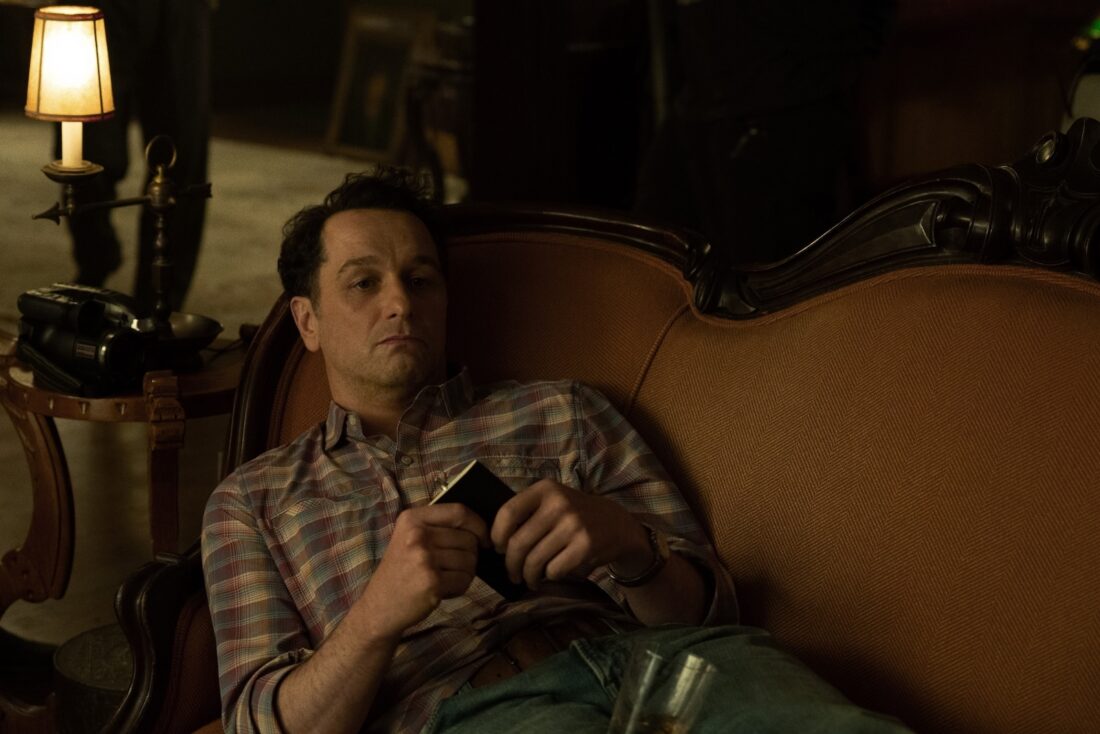
Steve Arnold: Yes. There was an enormous amount of set build on this on this show. The interior of the town hall we built on stage because we would go back to it many times. The Salty Whale was all built interior on stage. What’s called the rectory or the church office, where the Reverend is, we built that on stage. Then we built the Breakwater Inn, the lobby, the parlor, the hallway, the Captain’s Suite, the basement of the inn, the crawl space, we built all of that on stage. Then we had Patricia’s upstairs, downstairs. We had Ruth’s on stage. And we took the basement of the inn and expanded it for the basement of the town hall, and then we had all the tunnel systems down there. We had Tom Loftus’ house on stage, and many more. Any I’m missing, Jennifer?
Jennifer Engel: We built the lighthouse in the parking lot.
That’s amazing. Can you talk a little bit more about the lighthouse and the parking lot?
Steve Arnold: We had a tough time finding the perfect lighthouse. They’re part of the Coast Guard and they’re controlled by governmental agencies and they’re kind of off limits. You can’t just wander around and make a movie there. We found one that had closed down, and we used that for the bit where the lighthouse keeper gets on the bicycle and he rides away. But then we needed the lighthouse keeper up there for that big storm, and we needed Tom to go up there and figure out what was going on, and to do the storm at night with a rain rig and everything else, we had to do that in the parking lot. So we built the top of the lighthouse up on a scaffold, and we shot that in in the parking lot because we needed that amount of control.
How long did that take to put that all up?
Steve Arnold: We rarely have a lot of time, so we threw it together in probably in a month or less. It’s a lot of metal work, a lot of engineering to get the light to turn. It had to light up and do all those things, and we were copying the top of that existing lighthouse that we shot for the exterior.
I also want to talk about the museum. There’s so much in the background of those scenes that viewers can take in. Jennifer, can you talk about dressing that space and the different details you put there?
Jennifer Engel: We had these amazing display cases that were about nine feet long. They were from the turn of the previous century and were in beautiful condition, and then we just tried to fill them with old stuff. The parameter was to make it creepy, like formaldehyde jars of body parts and teeth and critters, and then different surgical tools. Creepy and old was what was driving all the filling at the historical society museum. And then we needed some bigger three dimensional stuff—we had those crazy mannequins with the bloody dresses. Steve kept saying, “More blood, more blood!”
Steve Arnold: And we actually got a straitjacket that I thought would be good, and if you look over the reporter’s shoulder you will see a mannequin wearing a straitjacket. And then of course all the graphics on the wall: Our graphics designer found things, and we found things like a whale eating someone, and there were specifics in the script about some kind of burned out house with somebody staring out from inside. Coming up with some of the things from the script was a little bit tricky because Katie did have very specific things written there, but we did find some pretty creepy stuff.
And finally, the games at the inn: I would just love to hear about the creation of those games, the names, everything.
Steve Arnold: They were very specific in the script from Katie. She had very specific ideas, but I have to give recognition to our graphic designer Ellen Lampl, who was working remotely and had the same information we did. We had the name Daddy’s Home and that they’re probably going to play this game, and it should look like it’s an old game. And then there was Teeth, and there was the Run Game, and other games. They went through many iterations with Ellen. I don’t know how many teeth things she did. We would show them to both Katie and [director Hiro Murai], and a lot of times Hiro would be very specific. But Ellen, our graphics designer, really hit it out of the park. And then, of course, the props department got involved in making the actual games once they were designed, so that we had the right pair of pliers in the tooth box and all of that.
The first season of Widow’s Bay is now streaming on Apple TV.